

How to Clean Gold Plated Jewelry Without Damage

Your favorite gold-plated hoops should catch the light, not collect fingerprints. Knowing how to clean gold plated jewelry the right way helps preserve its warm 18K finish, crystal sparkle, and polished look without wearing down the delicate outer layer.
Gold-plated jewelry is made to bring elevated style to everyday outfits, date nights, celebrations, and meaningful gifts. It does need a little more care than solid gold, though. The good news is that a gentle routine takes only a few minutes and can keep the pieces you reach for most looking beautifully considered.
How to Clean Gold Plated Jewelry at Home
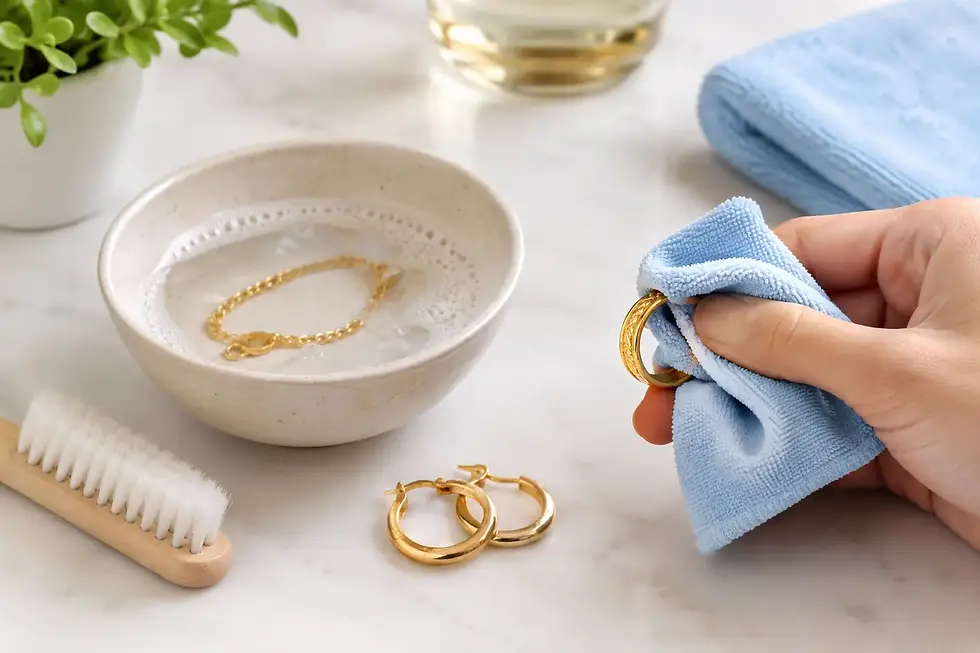
For most gold-plated earrings, necklaces, bracelets, and rings, start with the softest method. Use a dry, lint-free microfiber cloth and gently wipe the surface after wearing. This removes skin oils, makeup residue, and light dust before they have a chance to dull the shine.
If your piece needs more than a quick polish, prepare a small bowl of lukewarm water with a few drops of mild dish soap. Choose a gentle, fragrance-free formula when possible. Dip a soft cloth into the water, wring it out thoroughly, and carefully wipe the jewelry. The cloth should be barely damp, never dripping wet.
Pay attention to areas where residue tends to settle, such as earring backs, necklace clasps, ring interiors, and the spaces around crystals. For fine details, use a very soft baby toothbrush or a clean, soft-bristled brush with minimal pressure. Think of it as brushing a delicate fabric, not scrubbing a pan.
Once clean, wipe the piece again with a separate cloth lightly dampened with plain water to remove any soap film. Then dry it completely with a soft microfiber cloth. Let it air-dry for a few minutes before placing it back in its storage box.
Do not soak gold-plated jewelry. Even when a piece is crafted with durable stainless titanium steel beneath its plating, prolonged exposure to water and soap can affect the finish over time. It can also loosen the adhesive used for certain crystal settings.
What Not to Use on Gold-Plated Pieces
The fastest way to take the glow out of gold plating is to clean it with products designed for tougher metals. Gold-plated jewelry has a fine layer of gold over a base metal, so abrasive tools and strong chemicals can scratch, strip, or prematurely fade that top layer.
Avoid toothpaste, baking soda, lemon juice, vinegar, and powdered cleaners. These popular DIY methods may sound harmless, but they are too abrasive or acidic for plated surfaces. Skip silver polish, jewelry dips, rough paper towels, and stiff brushes as well.
Hand sanitizer deserves a mention, too. Frequent contact with alcohol-based sanitizer can leave a cloudy residue or gradually affect the finish. You do not need to worry about an occasional touch, but it is best to remove rings and bracelets before applying sanitizer, lotion, sunscreen, perfume, or hair spray.
Chlorine is another clear no. Take off your jewelry before swimming in a pool or using household cleaning products. Hot tubs, salt water, and steam rooms are also not ideal places for gold-plated pieces. A little prevention protects the luminous finish you chose in the first place.
A Simple Care Routine for Everyday Shine
Cleaning works best when it is paired with thoughtful wear. Put your jewelry on last, after skincare, makeup, fragrance, and hair products have had a moment to settle. At the end of the day, remove your pieces before changing clothes or heading to bed, then give them a gentle wipe with a dry microfiber cloth.
How often you should clean your jewelry depends on how often you wear it. A necklace worn once for dinner may only need a quick polish before storage. Rings and bracelets worn every day can benefit from a dry wipe after each use and a gentle damp-cloth clean every few weeks.
Perspiration, humidity, body chemistry, and product exposure all make a difference. This is especially true during warmer months or on vacation, when sunscreen and moisture are part of the day. Fading is not always a sign that a piece was poorly made. It can simply reflect how much contact the plating has had with water, oils, and chemicals.
For pieces finished with three layers of 18K gold plating, such as selected AN ATELIER designs, gentle handling helps you enjoy that exceptional glow for longer. Durable materials are a wonderful foundation, but careful cleaning remains the secret to keeping fashion jewelry looking fresh and refined.
Store Gold-Plated Jewelry Separately
The way you store jewelry matters almost as much as the way you clean it. Tossing necklaces, rings, and earrings together in a drawer invites scratches, tangles, and unnecessary friction between pieces.
Choose a lined jewelry organizer box, soft pouch, or compartmentalized tray. Keep each item separate when you can, especially crystal-set jewelry and delicate chains. Before putting anything away, make sure it is fully dry. Trapping moisture in a closed box can encourage tarnish and leave a piece looking less radiant the next time you wear it.
If you travel with jewelry, use a small organizer rather than wrapping pieces in tissues or placing them loose in a makeup bag. It is a simple detail that keeps a statement earring pair intact and your favorite necklace ready for the moment you unpack.
Can You Wear Gold-Plated Jewelry Every Day?
Yes, with mindful care. Gold-plated jewelry is designed to make everyday styling feel more special, whether you are wearing subtle studs to work or a bold necklace for an evening out. Still, everyday wear should not mean every activity.
Take pieces off before showering, exercising, swimming, cleaning, and sleeping. These habits reduce exposure to moisture, friction, and products that can shorten the life of the plating. If you want a ring or bracelet to stay part of your daily signature, reserve it for lower-contact moments and remove it when your hands will be in water often.
Some pieces are better suited to frequent wear than others. Earrings and necklaces typically have less contact with surfaces and soap than rings and bracelets, so they may maintain their finish more easily. It depends on your routine, not just the jewelry itself.
What to Do If Gold Plating Starts to Fade
A little softening of shine does not mean a piece has lost its beauty. First, clean it gently with the dry-cloth method to make sure the change is not caused by residue. Sometimes lotion, soap, and everyday buildup can make gold plating look duller than it truly is.
If the plating has genuinely worn thin, do not try to restore it with polish, gold paint, or an at-home replating kit. Those options can create an uneven finish and may damage crystals or settings. Professional replating is the more considered choice for a sentimental piece, although the cost may not make sense for every fashion-jewelry item.
Most of all, let your jewelry fit your life with a little intention. A careful wipe, dry storage, and a few seconds spent removing it before water or fragrance can protect the finishing touch that makes every outfit feel more like you.


Comments