
How to Clean Gold Plated Jewelry at Home

Your favorite gold-plated hoops should not lose their glow just because they have been loved well. To clean gold plated jewelry safely, think gentle rather than intense: soft materials, minimal moisture, and a little consistency will protect that luminous finish far better than a harsh polishing session ever could.
Gold-plated jewelry brings the warmth and elegance of gold to everyday styling. It is made by applying a fine layer of gold over a base metal, creating an elevated look at a more accessible price point. With thoughtful care, your necklaces, rings, bracelets, and statement earrings can stay polished, beautiful, and ready for every plan on your calendar.
Why Gold-Plated Jewelry Needs Gentle Care
The gold layer on plated jewelry is what gives each piece its rich finish. Unlike solid gold, that layer can gradually wear down when it comes into frequent contact with water, sweat, fragrance, lotions, and cleaning chemicals. This does not mean you need to keep your jewelry tucked away. It simply means your daily routine matters.
Pieces with durable bases, such as stainless titanium steel, are designed for more confident everyday wear. Still, even high-quality plating benefits from a little care. Three layers of 18K gold plating, for example, create a beautiful, substantial-looking finish, but abrasive products and repeated exposure to chemicals can dull any plated surface over time.
The goal is not perfection. Jewelry is meant to celebrate your style, mark meaningful moments, and make an ordinary outfit feel more like you. A few simple habits help preserve the finish while letting you wear the pieces you love.
How to Clean Gold Plated Jewelry Safely
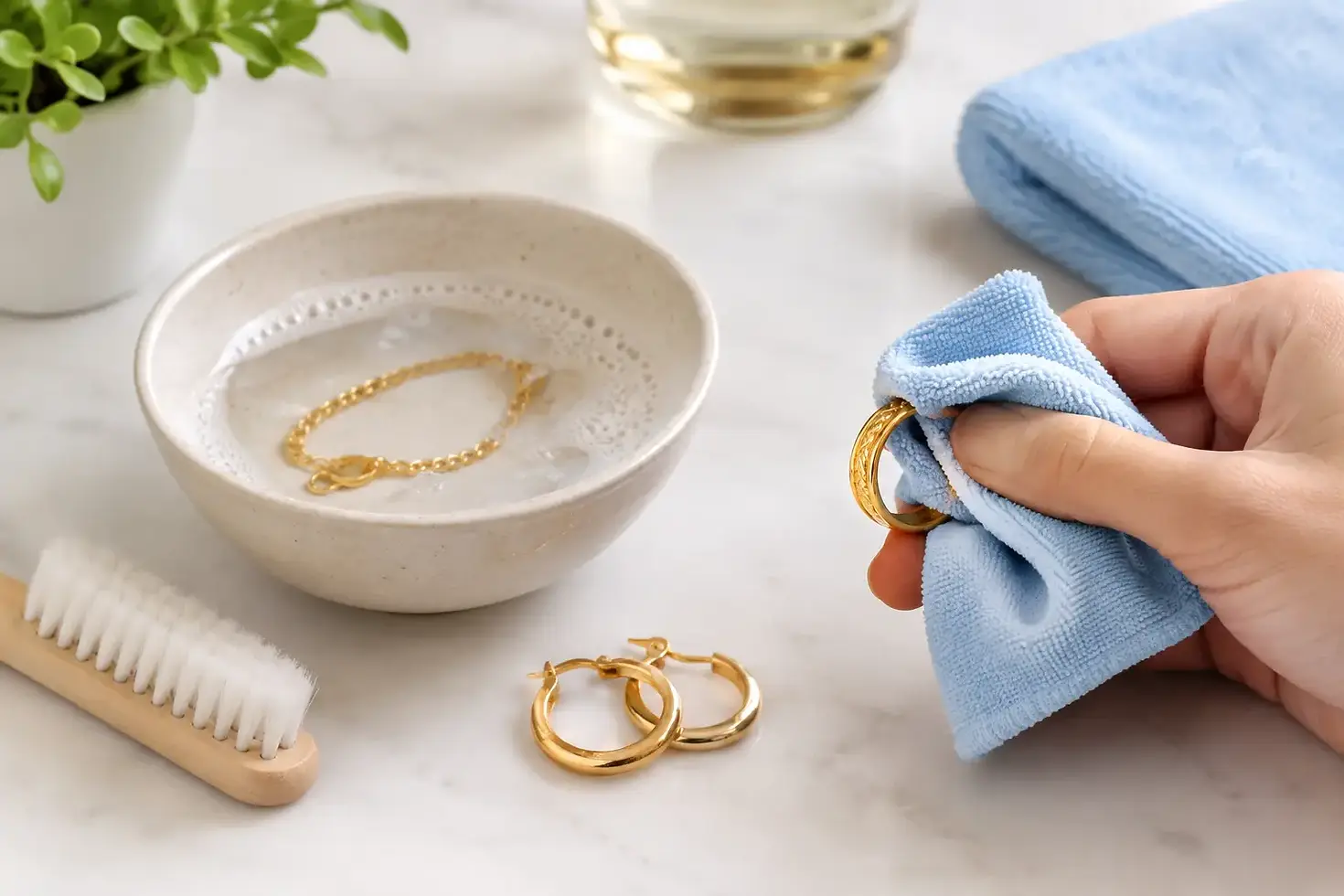
For most pieces, a dry microfiber cloth is the best place to start. Gently wipe your jewelry after wearing it, paying attention to areas that touch the skin, such as earring posts, ring bands, and the inside of bracelets. This removes surface oils, makeup, and light residue before they build up.
If a dry cloth is not enough, use a soft cloth lightly dampened with lukewarm water. Wring it out thoroughly first. The cloth should feel barely moist, never wet enough to drip. Wipe the piece with a delicate touch, then immediately dry it with a separate clean, soft cloth.
For occasional deeper cleaning, mix a small amount of mild dish soap into lukewarm water. Dip a soft, lint-free cloth into the solution, squeeze out all excess water, and gently wipe the jewelry. Do not soak it. Soaking can allow moisture into clasps, stone settings, chain links, and tiny gaps where it is difficult to dry completely.
Once clean, wipe away any remaining soap with a second lightly dampened cloth, then dry the piece fully. Let it rest on a soft towel for a few minutes before placing it back in your jewelry box. This is especially helpful for crystal-detailed pieces, where moisture can linger around settings.
What Not to Use
Gold-plated jewelry does not need aggressive products to look beautiful. In fact, the products often recommended for solid gold or sterling silver may be too strong for plated pieces.
Avoid jewelry dips, polishing creams, toothpaste, baking soda, vinegar, bleach, and alcohol-based cleaners. Skip rough paper towels, scrub brushes, and textured cloths as well. They can create fine scratches or wear at the plated finish. Ultrasonic cleaners and steam cleaners are also best avoided, particularly for pieces with cubic zirconia crystals, delicate links, or glued details.
If your jewelry has visible tarnish, discoloration, or a stubborn buildup that does not lift with gentle cleaning, resist the urge to scrub harder. A professional jeweler may be able to advise on the best next step, depending on the material and construction of the piece.
Everyday Habits That Protect the Shine
The easiest way to keep gold-plated jewelry looking polished is to put it on last. Apply perfume, hairspray, sunscreen, body lotion, and makeup first, then add your jewelry once those products have settled. This reduces direct contact with ingredients that may affect the finish.
Take your pieces off before showering, swimming, exercising, or cleaning. Chlorine, salt water, sweat, and household chemicals can be tough on plating. A delicate necklace may look perfectly fine after one pool day, but frequent exposure is where wear becomes more noticeable.
Rings deserve extra attention because hands come into contact with soap, sanitizer, water, and surfaces all day long. If you wear a plated ring daily, remove it before washing dishes, applying hand cream, cooking with acidic ingredients, or doing anything hands-on. It is a small pause that can make a real difference.
There is no single rule for how often you should clean your jewelry. It depends on how often you wear it, your climate, and your routine. In hot or humid weather, a quick wipe after each wear is especially helpful. For pieces worn only occasionally, cleaning before storage and before the next occasion is usually enough.
Store Your Jewelry With Intention
A beautiful finish can be affected even when your jewelry is not being worn. Tossing necklaces, earrings, and rings together in one pouch can lead to scratches, tangles, and unnecessary friction.
Store each piece separately when possible, ideally in a soft-lined organizer with divided sections. Keep necklaces clasped to prevent tangling, and place earrings together so they are easy to find. A jewelry organizer box is more than a neat finishing touch for your vanity - it helps protect the pieces you reach for most.
Choose a cool, dry place away from direct sunlight and humidity. The bathroom may be convenient, but steam and moisture make it less than ideal for long-term storage. If you are traveling, use a compact case with individual compartments rather than wrapping everything together in tissue or placing loose pieces in a makeup bag.
Special Care for Crystal and Statement Pieces
Statement jewelry deserves a softer approach. Larger earrings, crystal-accented necklaces, and bold bracelets often have more settings, details, and moving parts. Clean around stones with a dry microfiber cloth or a very lightly dampened cotton swab, without pressing into the setting.
Never tug at crystals or try to clean underneath them with a sharp object. If a stone feels loose, set the piece aside rather than wearing it until it can be assessed. A tiny repair is always easier than replacing a lost detail from a favorite piece.
For chain jewelry, support the chain in your hand as you wipe it. Pulling it through a cloth too quickly can catch delicate links. If a chain becomes tangled, lay it flat and patiently loosen it with clean fingertips instead of pulling at the knot.
A Simple Care Ritual Worth Keeping
Jewelry care does not need to feel like another task on your list. Keep a microfiber cloth where you get ready, and make a quick wipe part of taking off your earrings or rings at the end of the day. It takes less than a minute and helps your collection stay ready for workdays, dinner plans, celebrations, and thoughtful gifting moments.
At AN ATELIER, we believe accessories should feel special without feeling out of reach. Your jewelry is there for the compliment that changes your mood, the gift that says more than a card, and the everyday reminder that you deserve to feel polished. Treat each piece with a little softness, and it can continue to reflect that feeling back to you.


Comments