

Does Stainless Steel Jewelry Tarnish Over Time?

A necklace that still looks polished after a long workday, a dinner out, and a quick mirror selfie is not just a styling win. It is a material win. So, does stainless steel jewelry tarnish? Not in the same way as silver, brass, or low-quality fashion metals. Stainless steel is widely loved for its resistance to tarnish, corrosion, and everyday discoloration, making it a beautiful choice for jewelry designed to keep up with you.
That said, “tarnish-resistant” does not mean “never needs care.” Your jewelry’s finish, plating, exposure to products, and daily habits all play a part in how bright it looks over time. A little knowledge helps you choose confidently and keep your favorite pieces ready for every outfit and occasion.
Does Stainless Steel Jewelry Tarnish?
Stainless steel jewelry is highly resistant to tarnishing because it contains chromium. When chromium meets oxygen, it forms a thin protective layer on the surface of the metal. This barrier helps prevent the oxidation that causes many metals to turn dark, dull, or green.
Unlike sterling silver, which can develop a darker surface when exposed to air and sulfur compounds, stainless steel generally holds its cool silver-tone shine with minimal effort. It is also more resistant to rust than ordinary steel, which makes it especially practical for jewelry worn regularly.
Still, stainless steel can lose some of its luster if residue builds up on the surface. Lotions, sunscreen, makeup, body oils, soap, and hard-water minerals can leave a film that makes jewelry appear less bright. This is usually not true tarnish. In many cases, a gentle clean is all it takes to bring back its glow.
The grade and finish of the steel matter, too. Higher-quality jewelry-grade stainless steel is made to offer better resistance to corrosion and wear than inexpensive metal blends. Material descriptions can vary between retailers, so it is always worth looking for clear details about the base metal and finish rather than relying on appearance alone.
Gold-Plated Stainless Steel Has Its Own Care Needs
Gold-tone stainless steel jewelry adds another layer to the story. The steel beneath the surface remains durable, but the gold plating on top can gradually wear with friction and frequent chemical exposure. This is not quite the same as the steel tarnishing.
With three layers of 18K gold plating, jewelry can have a rich, elevated warmth while retaining the strength of a stainless steel base. Over time, however, rings and bracelets may show wear sooner than earrings or pendants because they come into contact with hands, desks, handbags, and water more often.
The areas most likely to change first are edges, clasps, ring bands, and spots where pieces rub together. If a gold finish becomes lighter after extended wear, that usually reflects plating wear rather than a problem with the stainless steel underneath. It is a normal trade-off for gold-plated jewelry at an accessible price point.
For special pieces you want to preserve beautifully, rotate them rather than reaching for the same ring or bracelet every single day. Jewelry is meant to be enjoyed, not hidden away, but giving your favorites a rest can help the finish stay luminous for longer.
Can Stainless Steel Jewelry Turn Green?
Quality stainless steel itself is not known for turning skin green. Green marks are more commonly associated with copper-containing metals reacting with moisture, sweat, skincare, or skin acidity.
If you notice a temporary mark while wearing any piece of fashion jewelry, clean both the jewelry and your skin, then consider what may have been in contact with it. A new body lotion, self-tanner, fragrance, or humid day can change the way jewelry wears against the skin. A piece with a worn plated finish may also expose a different underlying metal or alloy, depending on its construction.
Is Stainless Steel Jewelry Hypoallergenic?
Many people find stainless steel comfortable for sensitive ears and skin, particularly compared with lower-quality costume jewelry. But hypoallergenic does not mean every person will react the same way. Some stainless steel alloys contain nickel, and those with a nickel allergy may still experience sensitivity.
If your skin is especially reactive, choose pieces identified as hypoallergenic, keep earring posts clean, and stop wearing any jewelry that causes itching, redness, or discomfort. Comfort should always feel as effortless as your style.
What Makes Jewelry Look Dull or Discolored?
Daily life is usually the biggest factor. Sweat is slightly acidic and can leave residue on jewelry. Chlorine from pools and hot tubs can be harsh on plated finishes. Perfume, hairspray, sunscreen, and cleaning chemicals may also affect the surface over time.
Humidity can make these effects more noticeable. In warm climates, jewelry that is worn close to the skin may need a little more frequent cleaning, especially after a busy day outside. This does not mean you need to treat every necklace like a fragile heirloom. It simply means giving it the same thoughtful care you give the pieces that make you feel most like yourself.
A few habits make a visible difference:
Put jewelry on after applying perfume, lotion, makeup, and hairspray.
Remove rings, bracelets, and necklaces before swimming, showering, exercising, or cleaning.
Avoid spraying fragrance directly onto a pendant or earring stack.
Store pieces separately when possible so chains, crystals, and plated surfaces do not rub together.
Wipe jewelry with a soft, dry cloth after wearing it, especially in humid weather.
These small rituals protect both shine and detail. They are particularly useful for crystal-set styles, where product residue can collect around settings and soften the sparkle.
How to Clean Stainless Steel Jewelry Safely
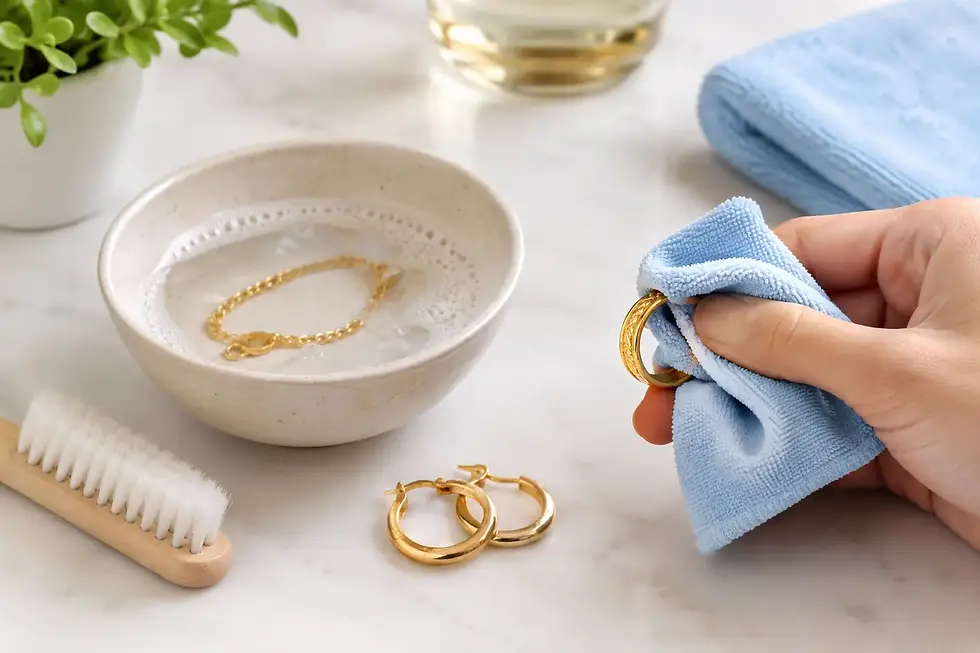
For routine care, start simply. Wipe your jewelry with a soft microfiber or jewelry cloth to remove fingerprints and surface oils. This is often enough for pieces worn lightly.
If it needs a deeper clean, use lukewarm water with a small amount of mild soap. Let the piece sit briefly, then gently wipe it with a soft cloth or a very soft toothbrush. Rinse carefully and dry it completely with a lint-free cloth. Do not store jewelry while it is damp.
Be more careful with gold-plated and crystal jewelry. Avoid abrasive polishing cloths, toothpaste, baking soda, rough brushes, and strong jewelry dips. They can scratch a plated surface, loosen adhesive in certain settings, or leave a finish looking uneven. “Stronger” is not better when your goal is a lasting, polished look.
If a chain becomes tangled, resist pulling it apart quickly. Lay it on a flat surface and work slowly with clean fingers or a fine pin. The same gentle approach applies to clasps and delicate crystal details.
Storage Is Part of Jewelry Care
The right storage keeps your collection easier to wear and better protected. A jewelry organizer box helps prevent chains from knotting, earrings from going missing, and rings from scratching against harder pieces. Keep your box in a cool, dry place away from direct sunlight and steamy bathrooms.
For pieces you do not wear often, a soft pouch or separate compartment is ideal. If you live somewhere humid, make sure jewelry is fully dry before storing it. You can also avoid leaving pieces loose in a handbag, where keys, coins, and cosmetics create unnecessary friction.
Thoughtful storage turns getting ready into a small luxury. When every favorite piece is visible, clean, and ready to style, it is easier to reach for the earrings that lift a simple outfit or the necklace that makes a gift feel personal.
When Should You Replace or Replate a Piece?
A well-made stainless steel piece can stay in your rotation for years with proper care. Gold-plated styles may eventually show wear at high-contact points, especially if they are worn daily. Whether to continue wearing, replace, or replate a piece depends on its construction, sentimental value, and the condition of the finish.
If the jewelry is simply dull, clean it first. If plating has worn through noticeably, it may be time to reserve it for occasional wear or choose a fresh version for your everyday collection. There is no need to expect plated jewelry to perform exactly like solid gold. Its beauty lies in delivering a luxurious look with the freedom to experiment, layer, gift, and celebrate often.
At AN ATELIER, jewelry is designed to feel like a statement of self-worth, not a piece you need to overthink. Choose materials that suit your routine, care for them with a light hand, and let the pieces you love keep showing up for your everyday moments and your memorable ones.


Comments